Portraits
Lives worth telling
Nine people from the Hegnauer study whose records say more than when they were born and buried, from a probable cook in fourteenth-century Zürich to a social worker in Tacoma.
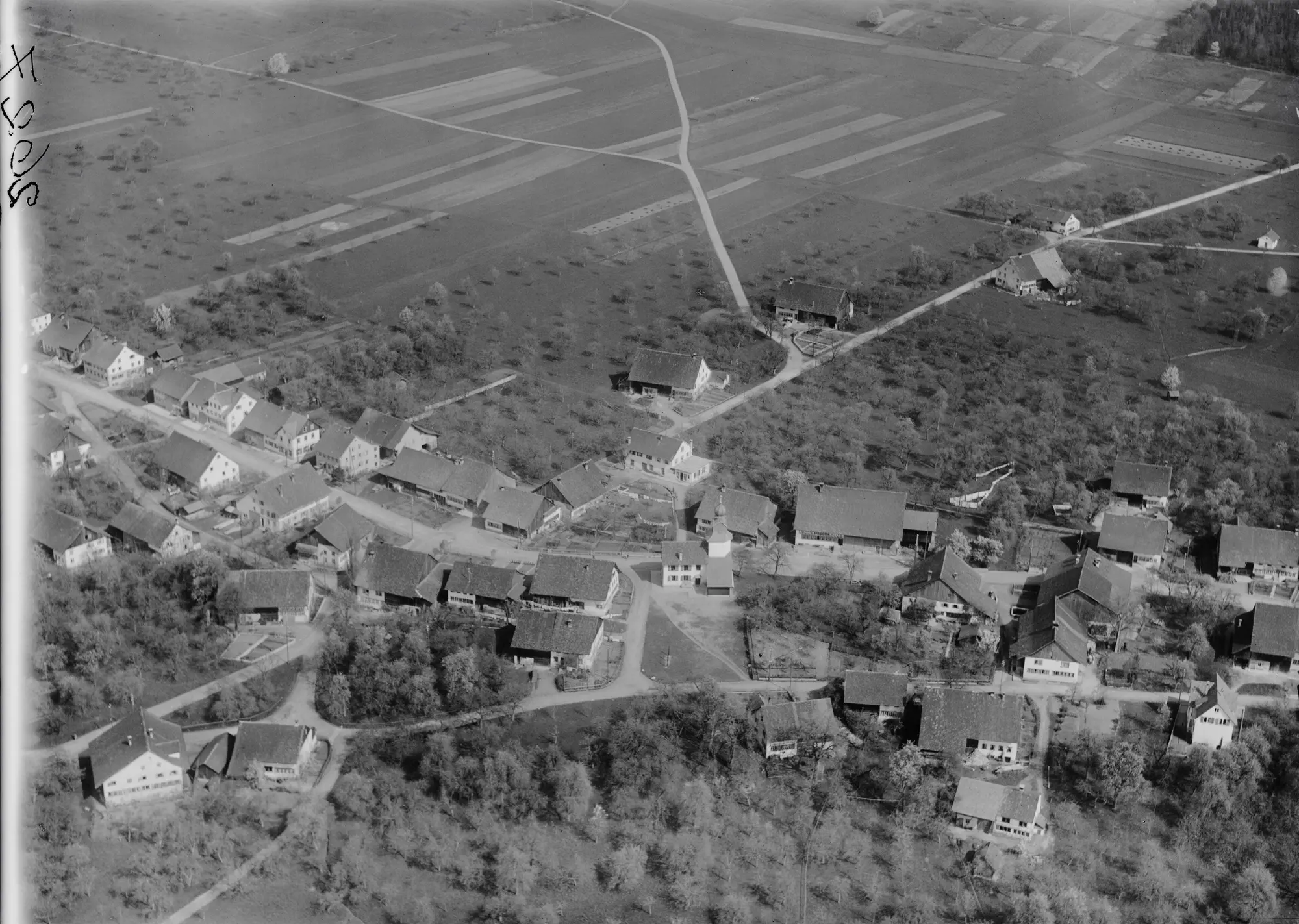
Hegnau, the village near Zürich that gave the surname, is first recorded about 1150.1, 2 Most of the people who have carried the name since then left what most people leave: a baptism, a marriage and a burial, if that. A few left more. The nine below were chosen because their records say enough to tell a life: a probable cook, a bankrupt, a seaman, a minister, a social worker, and several who crossed the Atlantic, the youngest at four and the eldest at sixty.3, 4 Where the study says “probably”, so does this page.
Johans Hegenower (recorded 1366)
Johans Hegenower is the earliest bearer of the surname found so far, and he was probably a cook.5 In 1366 the tax book of the city of Zürich entered him in the Neumarkt quarter, in the household of one “Irmense”.5, 6 The editors of the printed edition note that his surname is written over two struck-out words, “sin koch”, “his cook”.5 In the same year a Hegnöwer with no first name was taxed in the Rennweg quarter, and from 1372 to 1375 a “Hegnöwerin” appears as the sister of Cuni Schönöwert; whether that was her married name or a byname, “the woman from Hegnau”, the record does not say.5 So the name was in use in the city about two centuries after the village is first recorded.1 A century later, in 1467–70, a Herman was taxed at Hegnau itself, with his wife and his son Wilhelm.7 Of Johans himself the study knows nothing more.8
Genovefa Hegnauer (1561–1616)
Genovefa Hegnauer’s life can be followed in the church books of Elgg from her baptism to her death fifty-five years later, although the index spells her first name five different ways.9 She was baptised on 6 April 1561, the daughter of Blasius (Bläsy) Hegnauer and Otylia Nussberger, and indexed as “Benefe”, a misreading of Genefe.9, 10 Her two brothers, baptised in 1557 and 1566, were both named after their father.11, 12 She very probably became the wife of Adam Peter: she is the only Hegnauer girl of her name in the Elgg index, and the couple’s first son, baptised on 9 March 1585, was named Blasius, as her father was.9, 13 A son, Fridrich, followed in 1588, and a daughter, Maria; the entries call their mother “Genevo Hegner”, “Ganeur Hegner” and “Geneur Hegnauwer”.13–15 In her lifetime the parish changed shape, as its villages in the Thurgau, which had returned to the Catholic faith, broke away from Elgg.16 She died on 3 November 1616, and the burial register calls her “Genovia Hegnower”, the wife of Adam Peter.17
Jacob Hegnauer (before 1695–after 1734)
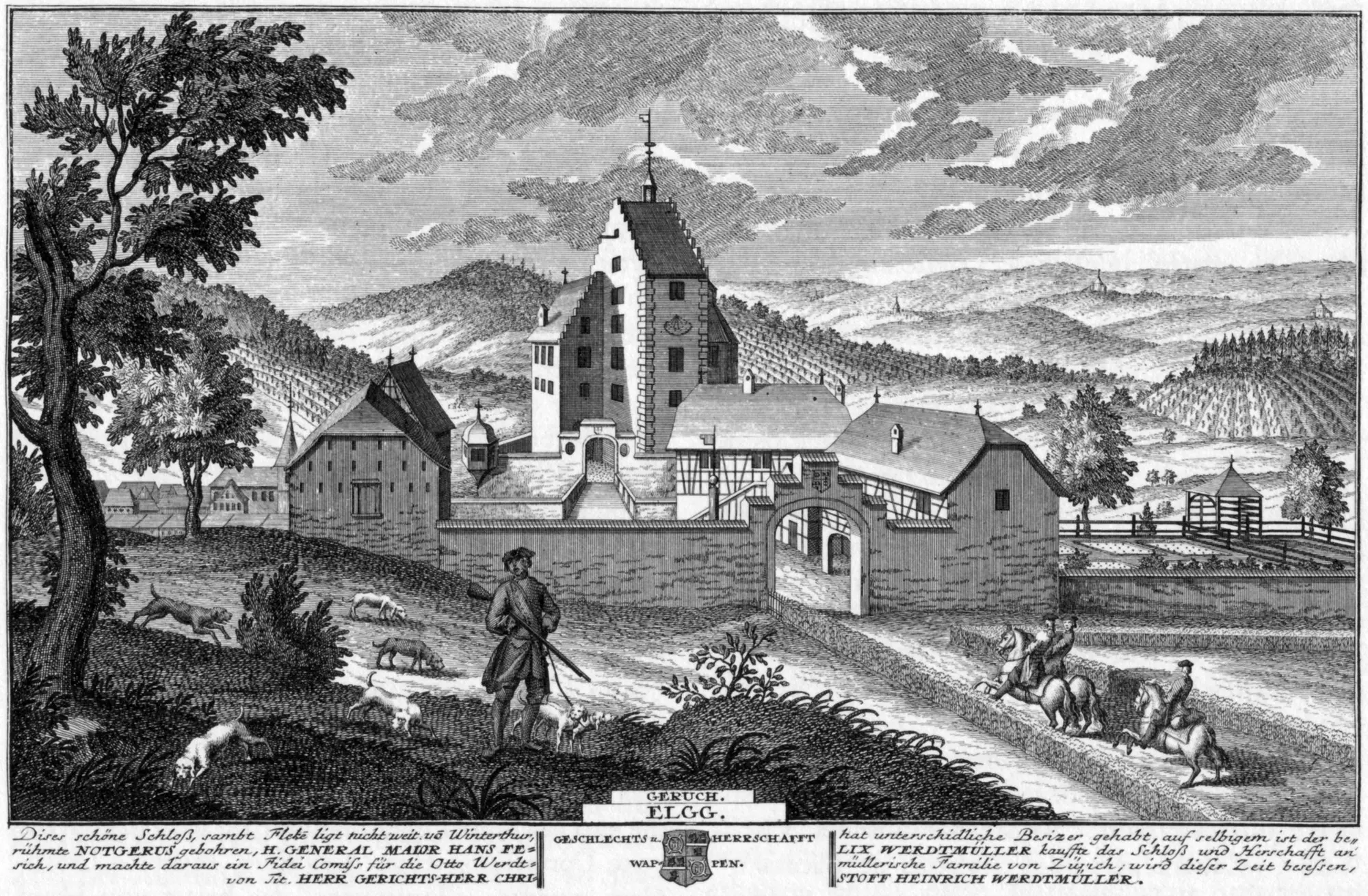
Jacob Hegnauer is the first of the name in the registers of Igis, in Graubünden, and the later Hegnauers of Igis, the Missouri emigrants of 1856 among them, very probably all descend from him.18 He married Margreth Hartmann in the Igis church on 1 March 1715, entered as “Hagenauwer”.19 Where he came from is not recorded.18 The name is a Zürich one, and the Familiennamenbuch der Schweiz records only two Hegnauer citizenships older than 1800, at Elgg and at Seengen, in Aargau; the study’s leads point back to canton Zürich, to Elgg and to Hegnau’s own parish, but none is proven.2, 20, 21 Elsbeth Hegnauer, very probably his sister, married Conradin Michel at Igis in January 1717.22 Margreth bore him two sons, one of whom died before his first birthday, and she was buried on 26 February 1724, aged forty-three.23–25 Four months later Jacob married Leta Gujan.26 They had at least four children, the last baptised in January 1734, and that is the last record of Jacob alive.18, 27, 28 A Jacob Hegnauer buried at Igis in August 1744 may be he or his son.29
Peter Hegnauer (1812–after 1880)
Peter Hegnauer was declared bankrupt at Igis in 1850, spent the next fifteen years probably under a guardian, and at sixty left for America.4, 30 He was baptised there on 19 February 1812, and in 1833 he married Anna Berri of Trimmis; over the next twenty-five years they brought thirteen children to the church for baptism, and four of them died young.31–33 The cantonal gazette of Graubünden announced his bankruptcy in July 1850, and a notice of that August, probably about him, set a guardian over Peter Hegnauer and his family at the family’s own request.30 After his father’s death in January 1854, the gazette’s call to creditors named Peter as Nutin’s grandson, about to emigrate to America with his family.34, 35 A week later it corrected itself: he was the son, and he was moving to the Engadine.36 America came eighteen years later, in 1872, as the register of the Igis citizen families records.4 In 1880 a Peter and Anna Hegnauer of the right ages, both born in Switzerland, were living at Fountain City, Wisconsin, on the Mississippi, probably the same couple.33, 37, 38 That census is the last record of him.33
Verena Siegrist (about 1826–1896)
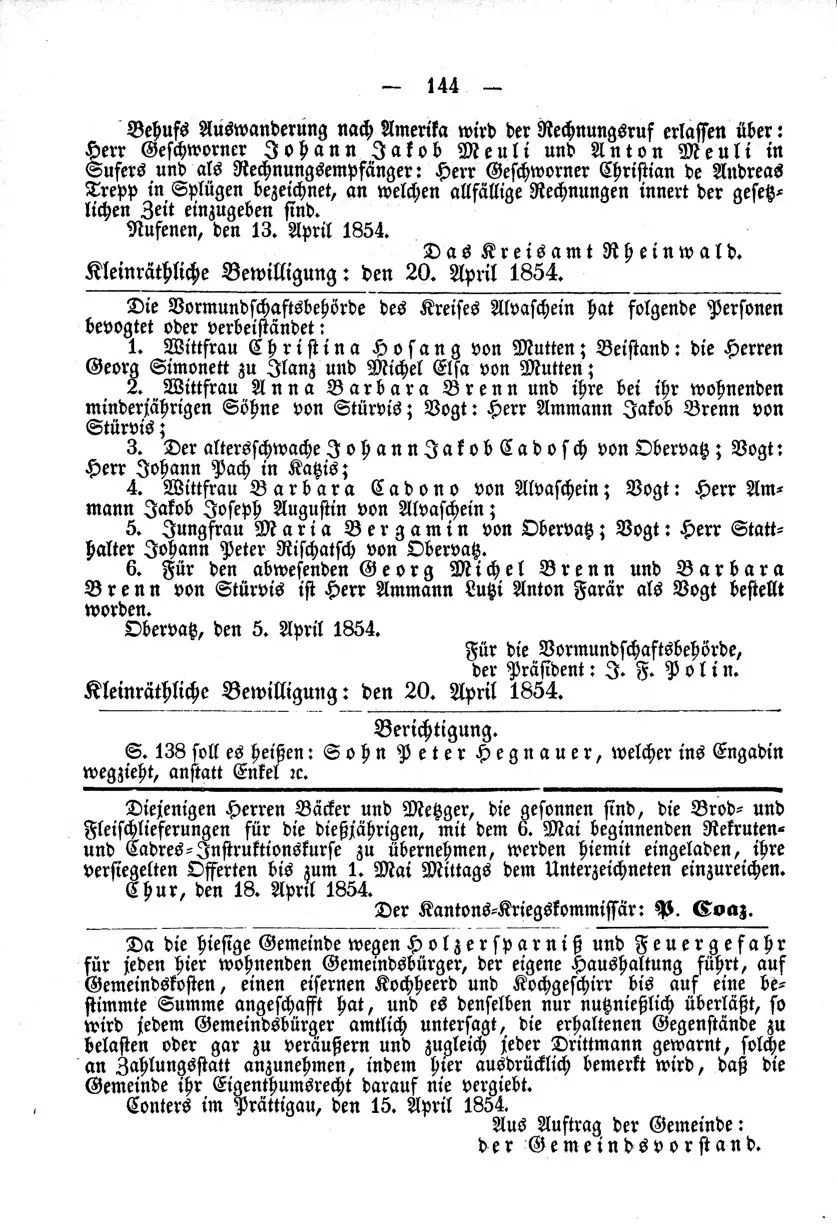
Verena Siegrist probably crossed the Atlantic in her late fifties, and nearly every Hegnauer recorded in Monroe County, New York, between 1884 and 1970 belongs to her family.39, 40 She was the wife of Jacob Hegnauer of Seengen, in Aargau: their son Jacob Rudolph’s Social Security entry gives his birthplace as “Sengen” and his parents as Jacob Hegnauer and “Farina”.41 A Luise Hegnauer, born about 1846, whose parents are indexed as Jakob and Verena Siegrist, married Rudolf Buchli in 1869: probably an elder daughter of theirs, who stayed in Switzerland.40, 42 On 2 April 1884 Jacob, aged fifty-eight, probably landed at New York with a party of younger Hegnauers, among them their sons Jacob and Hans.40, 43–45 In October a Verena Hegnauer, written “Hegnaner”, sailed from Le Havre on the steamer Saint-Germain, probably her, and a “Tereta Hegnauer”, aged fifty-nine, possibly the same woman, landed at New York on 30 October.39, 46 Verena probably died at Rochester on 21 April 1896, and Jacob on 17 July 1899; both are buried in Mount Hope Cemetery.47–49 Their family accounts for about 640 records, the largest American cluster in the study, with branches as far apart as Quebec and California.40 When her son Rudolph died in 1931, his death notice still counted a sister in Switzerland.50
Susanna Katharina Hirschi (1846–1918)
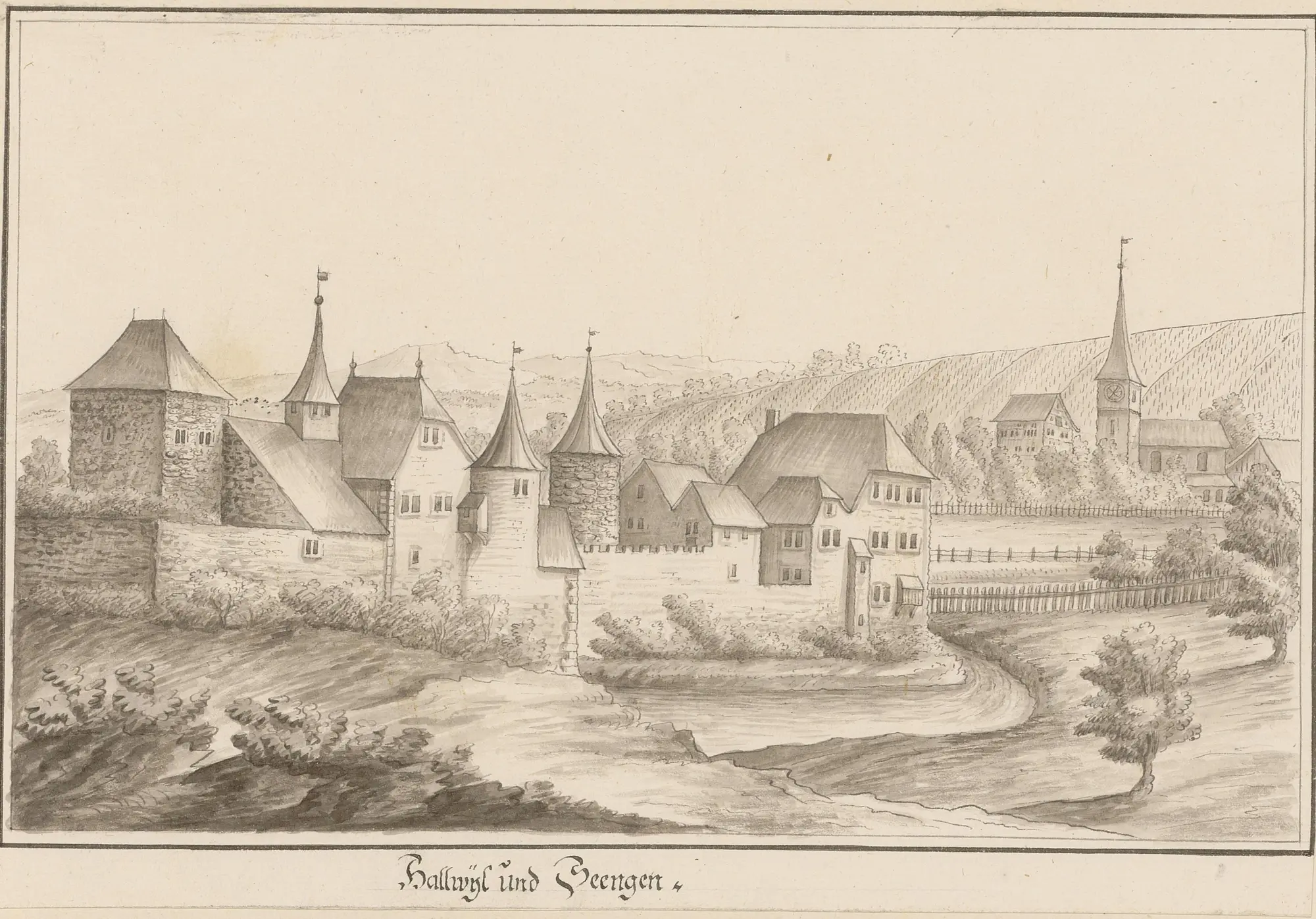
Susanna Katharina Hirschi came to America at four, and half a century later the census of 1900 recorded that she did not speak English.3, 51 She was born on 15 May 1846 at Amsoldingen, in canton Bern, the eighth of the ten Swiss-born children of Christian Hirschi, a dairyman, and Magdalena Stocker.52, 53 In the summer of 1850 her grandfather, her parents and the ten children sailed from Le Havre on the Belmont, landed at New York on 1 August and reached the Swiss settlement of Highland, Illinois, two weeks later.3, 54, 55 There, on 4 July 1866, she married Leonhard Hegnauer of Igis.56, 57 In 1869 they moved to Bates County, Missouri, and farmed in Pleasant Gap Township until about 1907; she bore seven children, five of whom outlived her.51, 58 When her father’s estate was settled in 1889, her seventh share came to $1,955.61.59 Widowed in 1916, she was granted a pension on Leonhard’s Civil War service.60, 61 She died of pneumonia at her son Christian’s home near Prairie City on 12 February 1918, aged seventy-one.62, 63 The Pleasant Gap correspondent of the Appleton City Journal wrote:
This community was shocked when the news came over the telephone that Grandma Hegnauer had gone to her reward.64
Their double gravestone in the Reform Cemetery calls her “Susanna K. seine Frau”, his wife.65
Rudolf Hegnauer (born 1881)
Rudolf Hegnauer went to sea, and for three decades the passenger and crew lists of the port of New York record his arrivals.66 He was born on 16 October 1881 at Seengen, the village of the Rochester family, though no record connects him with them.66, 67 His naturalisation papers call him a seaman who had come over in 1904 on La Lorraine.68 He became an American citizen at New York in 1919 and registered for the draft in both world wars.69–71 Between 1920 and 1951 the lists probably record him arriving at New York fourteen times.66, 72, 73 On 10 September 1926 he probably married Helen Erna Caroline, who had been born in Germany in 1900, in Manhattan.66, 74 By the 1940s he was a marine engineer living at Queens Village, and Helen was naturalised on 23 June 1944.68, 71 No children appear in the records, and his death has not been found.66 Helen died in March 1973, with her last Social Security residence given as “Europe”.66
Lotta Alice Donnell (1890–1973)
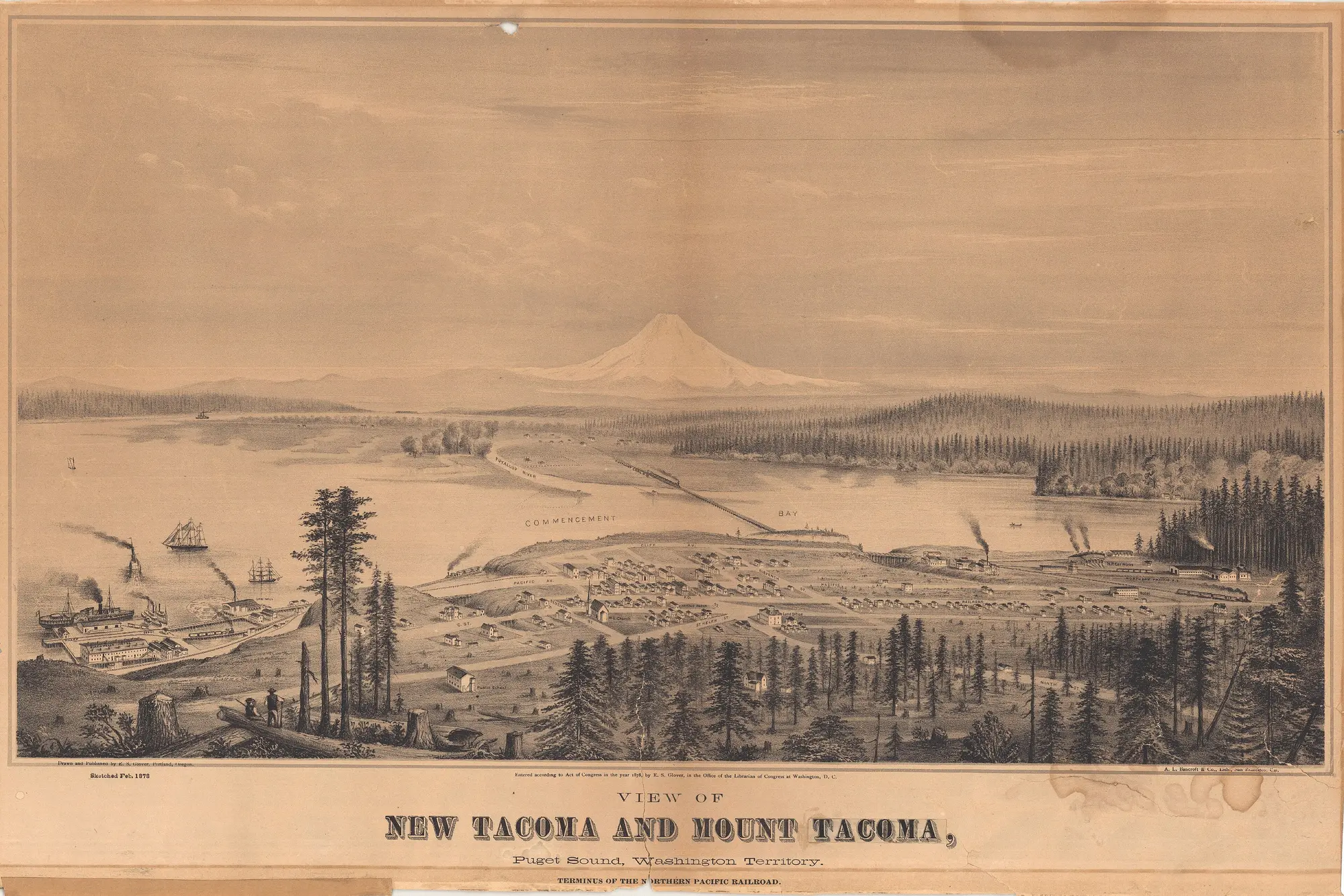
Lotta Alice Donnell married into the name in 1910, and after the marriage ended she made her own way in welfare work, through the Depression in Minneapolis and from 1944 in Tacoma.75, 76 She was born in Indiana on 3 January 1890, the elder daughter of a Presbyterian minister, George Johnson Donnell.77, 78 She and Robert Lucius Hegnauer graduated together from the Appleton City Academy, and on 9 August 1910 her father married them at her parents’ home in Marshall, Missouri.79, 80 The Marshall Republican called her “a very pleasant, cultured and sensible young lady who is worthy of the best husband”.80 They lived at Urbana, Illinois, where she studied music, and then at Wells, Minnesota, where their two sons were born.81, 82 In November 1930 a Faribault County court granted a divorce in “Hegnauer vs. Hegnauer”, very probably theirs, and in 1940 the census listed her as divorced.76, 83 In October 1931 she was directing the Family Welfare Association’s emergency clothes station in Minneapolis, where women were paid by the hour to mend and remake used clothing; more than 1,500 garments had gone to needy families since late August.84 In Tacoma she was a children’s worker for the Pierce County welfare department in 1950, and she retired from the Children’s Home Society of Washington.75, 85 She died at Tacoma on 5 April 1973, and her marker reads simply LOTTA D. HEGNAUER, 1890 1973.78, 86
Leonard Samuel Hegnauer (1891–1978)
Leonard Samuel Hegnauer, a Missouri farmer’s son, became a minister, and his name survives above all in other people’s obituaries.87, 88 He was born at Rockville, Bates County, on 21 March 1891, the elder son of Christian Hegnauer and Anna Wirz, and his names were those of his two grandfathers, Leonhard Hegnauer and Samuel Wirz.87, 89 At nineteen he was single and working at home as a labourer; by 1920 he had a wife, Anna K. Yoss, and four children.90, 91 The family was in Illinois by about 1923 and at Canton, Ohio, by 1940, and Canton was his home for the rest of his life.87, 92 About 290 entries in a newspaper obituary index name “Rev. L. S. Hegnauer”, or Rev. Leonard S., in someone else’s obituary as the officiating minister, and the study places them on him as probable.88, 93 Where he trained, and where he served before Canton, is still to be found.94 In August 1960, aged sixty-nine, he landed at New York on his return from a journey abroad.95 His son Robert Lawrence (1915–2012) was a minister too.88 Anna died in 1961, and Leonard on 24 June 1978, aged eighty-seven; both lie in West Lawn Cemetery, Canton.96–98
Nine lives, then. The rest of the family left quieter papers, or the study has not found them yet.